Equipment telemetry
Correlate video events with available equipment signals such as load, speed or pressure. Agree timestamps, units, identifiers and the interface with the site’s engineering team.
Compare central, edge, snapshot and hybrid video analytics. Plan processing, connectivity and evidence transfer for industrial and intermittently connected sites.
Decide how quickly an event must be detected, which information can leave the site and how reliable the connection is. These requirements determine where models run, where evidence is stored and how the operator receives the result.
A remote drilling rig and a well-connected campus can use the same platform with different processing and communication designs.
Select an architecture for the required scenarios and operating conditions.
| Approach | Data sent to the centre | Link and response considerations | Good fit |
|---|---|---|---|
| Central video processing | Continuous camera streams | Requires sustained uplink capacity. Central recognition depends on the delivery of video. | Sites with reliable high-capacity links and a preference for central compute. |
| Central snapshot processing | Periodic still images | Reduces the data sent, but events shorter than the sampling interval can be missed. | Slow-changing conditions and periodic visual checks. |
| Edge processing | Events, statistics and selected clips | Recognition stays on site. Local buffering and later upload are designed for the expected outages. | Remote rigs, moving sites, limited links and time-sensitive local workflows. |
| Hybrid processing | Selected video plus local events | Assign each task to the site or centre according to latency, bandwidth and compute needs. | Mixed fleets and workloads that combine local response with central analysis. |
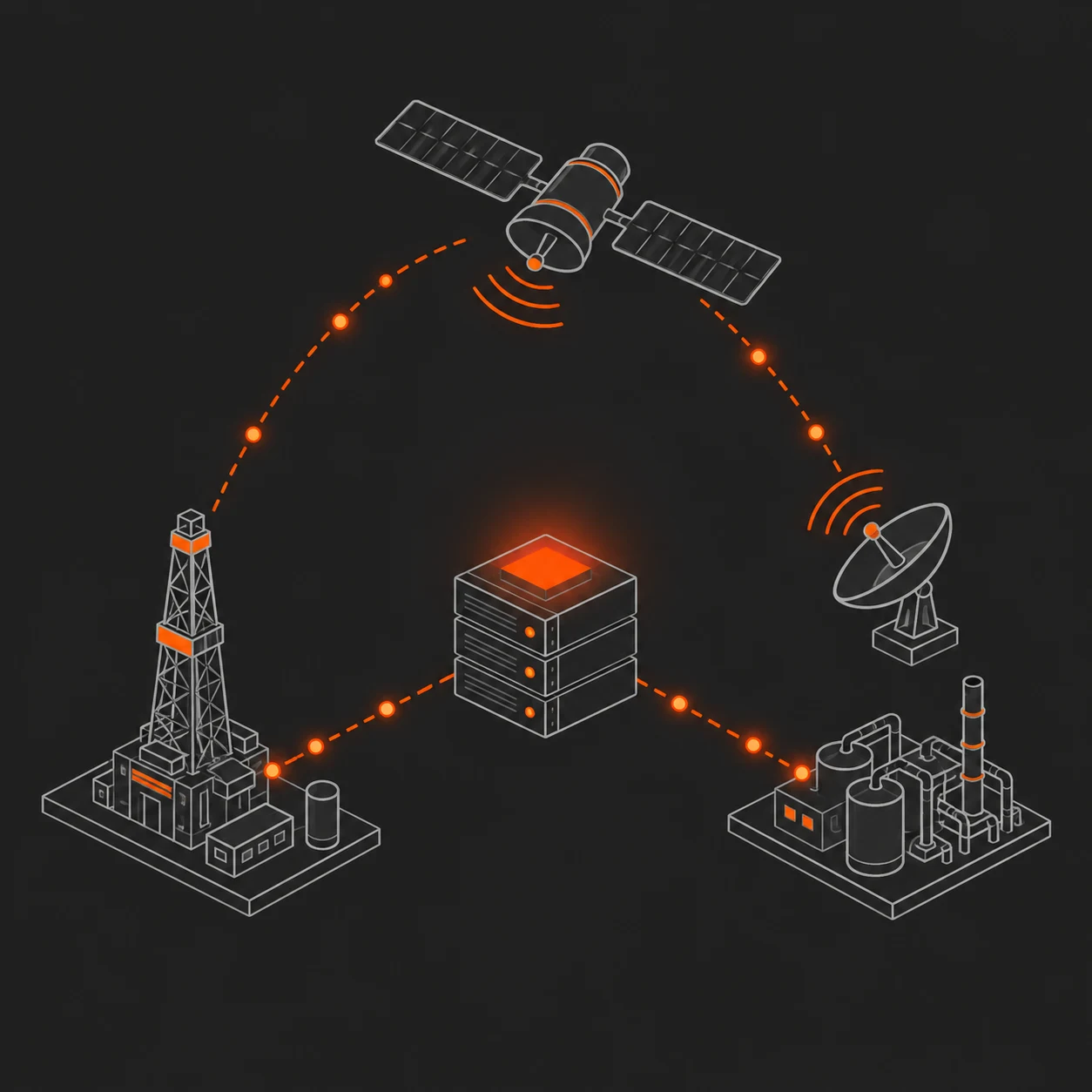
Video, equipment signals and operating context.
Models, scenario rules and local event records.
Metadata and selected evidence sent over the available link.
Cross-site review, reports, access control and agreed integrations.
Local processing can keep recognising events while the connection to the centre is unavailable. The delivery design defines local storage, upload retries, retention and the evidence transferred after connectivity returns.
Use structured events and aggregate statistics for routine transfer. Send video evidence according to the agreed policy: when an event occurs, when an operator requests it or within a scheduled transfer window.
Buffer capacity, clip length, event frequency and available upload time determine the required storage and bandwidth. Test these together with recovery after a representative connection outage.
Satellite and connectivity providers can combine this flow with their field connectivity and support services.
Correlate video events with available equipment signals such as load, speed or pressure. Agree timestamps, units, identifiers and the interface with the site’s engineering team.
Where tags and anchors are installed, zone presence and time can add context to a video event. This can support service-work confirmation and investigation.
Connect the selected events to operator displays, alerts or agreed equipment interfaces. Validate the complete detection-to-response path at the site.
Bring site events into a common review and reporting workflow. Define customer and site boundaries, user roles, audit needs and the operational indicators used by each team.
Manage model and scenario versions, validate changes and plan rollback before replicating a configuration across the fleet.
A provider or integrator can deliver the field equipment, connectivity and first-line service. ViewLogic supplies the platform and agreed analytics capabilities. Integration scope, support levels and service commitments are defined for the engagement.
Partner and white-label optionsWhether the project is in the Gulf, an industrial site in India or Asia, or a mine in Latin America or Africa, specify where processing and evidence storage must run. Include the available network, site access and partner responsibilities in the deployment scope.
Consider local processing when bandwidth, processing delay or data handling makes continuous video transfer unsuitable. Specify what evidence and metadata should reach the central operating layer.
Plan local operation, buffering, transfer priorities and recovery behaviour for the agreed topology. Test how events and evidence are handled during an outage and after connectivity returns.