
A consistent view of office condition
A major telecommunications company in Asia implemented a system for monitoring the condition of its Class A office and supporting cleaning control. The aim is to give the facility team a consistent view of areas requiring attention and a documented route from an observation to corrective work.
Facility condition and cleaning scenarios
Visible condition changes
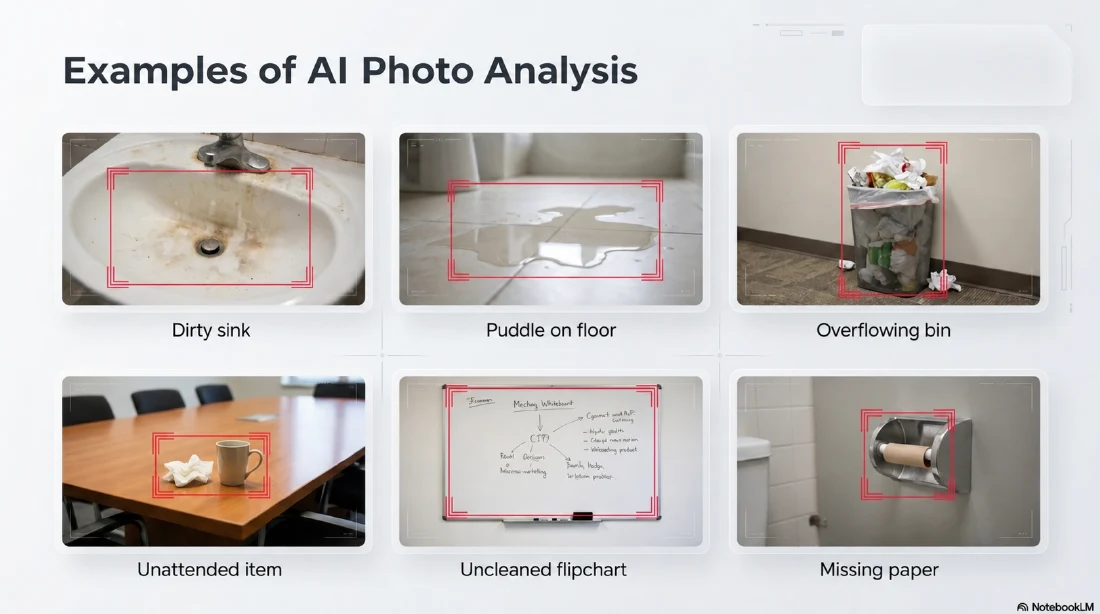
Check for floor stains and puddles, litter, overflowing bins, unattended items and visible damage. Compare the current view with the agreed reference condition of the area.
Cleaning coverage
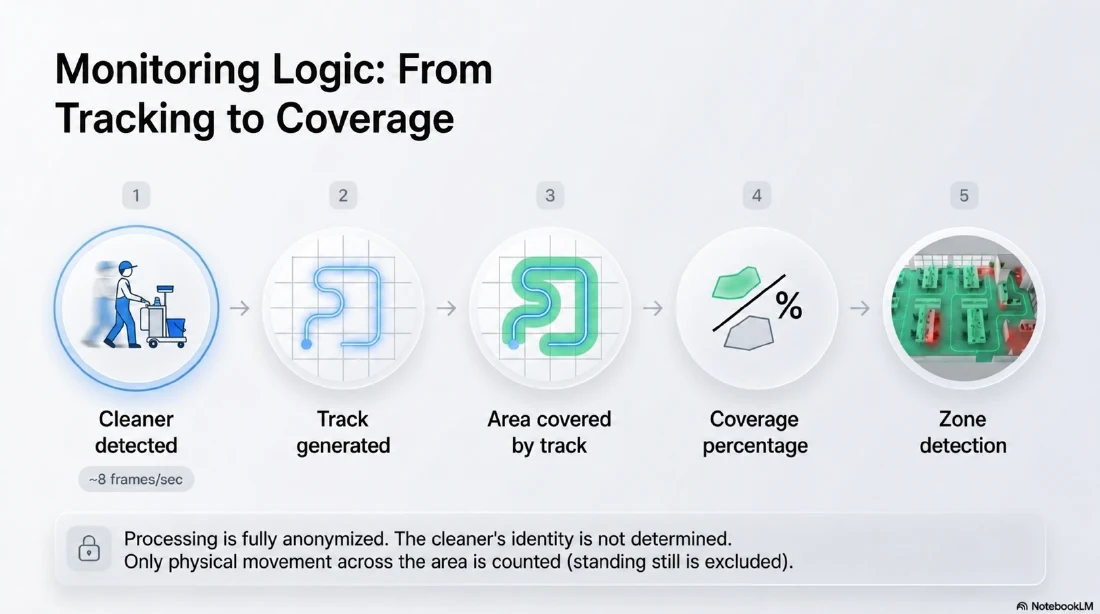
Follow a cleaner’s movement through a configured area and estimate the floor area covered during the shift. Highlight areas that were not covered for the supervisor to review.
Room inspection photographs
For rooms without fixed cameras, use a structured mobile photo inspection: collect the required views, check that no people are in the frame, and analyse visible condition.
Evidence and corrective work
Attach a relevant image to an issue, route it to a responsible team and avoid repeated tickets for the same unresolved condition. Re-check the area after remediation.
What cleaning coverage means
The approach described in the presentation derives coverage from movement through the monitored area, excluding stationary presence. It does not require identifying the cleaner for that calculation. Coverage is a measure of where work took place; visual condition checks and supervisor review provide additional evidence of cleaning quality.
The example percentages and thresholds in the presentation explain the method. They are not reported performance results from this telecommunications office. Relevant zones, shift intervals and acceptance thresholds are configured for the site.
A closed operational workflow
The described workflow moves from detection to assignment, remediation, re-inspection and manual closure. The system can comment when an area returns to its reference condition, while the responsible person controls final closure. Dashboards group issues by room, floor or contractor and show changes over time.
Deployment and privacy
The reference architecture processes video and inspection photographs on premises and provides role-based access. A mobile inspection workflow can complement fixed cameras in appropriate unoccupied rooms. The presentation describes checks for people in inspection photos and deletion of compliant photographs; the retention and access policy must be configured for the actual customer environment.
Further development
The presentation separates the initial facility-condition and cleaning scope from later development: fire-safety integration, fuller contractor SLA management, other building systems and eventually an operational digital twin. These roadmap items are not represented as completed components of the office case.
Smart Facility AI presentation
Cleaning coverage, facility monitoring, photo inspections and the development roadmap.
Download presentation · PDF · 22.0 MBSmart Facility AI · English presentation · 8 slides.