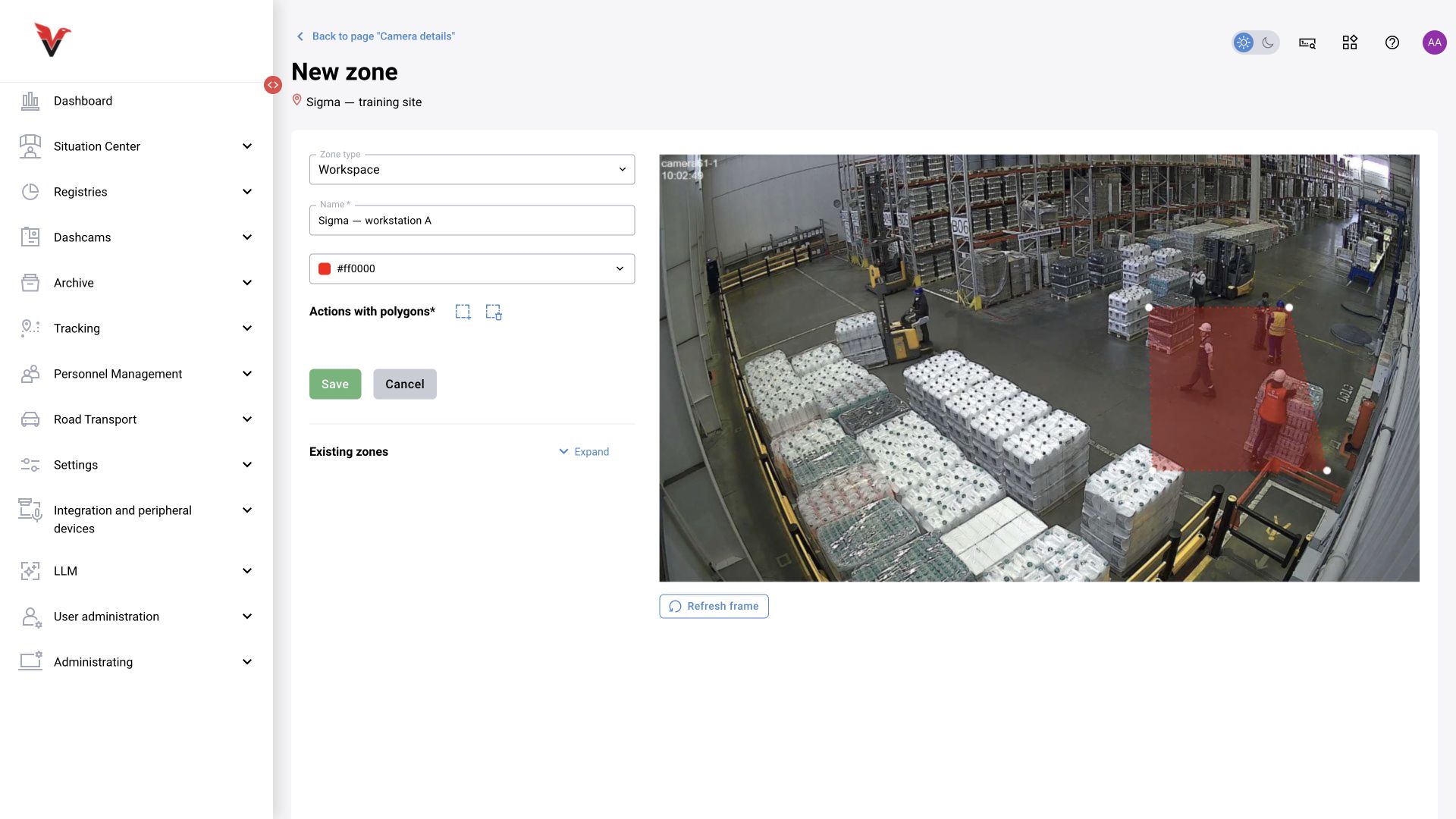
Built-in workplace monitoring: Sigma example
Task: track occupancy at two workshop stations during a shift and investigate periods of absence. BOX 3.2 uses built-in detection and counters; this case does not require an LLM.
- Create the site
Sigma → Workshop → Area 1and a camera with a stable angle. For a training video, use a virtual camera. - Create a preset with a suitable primary person detector. Use the detection result for counting; do not classify every person as a violator.
- Draw separate zones of type Workplace:
Station 1andStation 2. Do not include the shared walkway, otherwise a passing employee will affect station occupancy. - Link the zones to an attendance schedule: working days, working interval, allowed break, and min/max for each mode.
- Test known clips: an empty station, one person, two people, departure, and return. Compare the actual intervals and zones.
- Open the current presence journal and select the day and zones; review presence, absence, and the number of departures. For a disputed interval, open the video and camera health status.
- If you need alerts for deviations from the required headcount, configure the corresponding categories and processing rules. The viewing chart alone does not define all conditions for delivery to the responsible person.
What the older workplace attendance manuals provide. They explain the historical Interval and Extended XLSX reports in detail: people count, arrival and departure times, presence, absence, and departure count. The value in the older interval chart is the maximum number of people in the zone during the interval. This is useful for reading old reports but must not be transferred to the current timeline as its only meaning.
The original workplace attendance example shows 49 minutes of presence, 14 minutes of absence, and 5 departures over 63 minutes. This is an example from the source manual, not a new Sigma measurement. A complete new run of the workshop videos and verification of the resulting figures were not performed during this text-preparation stage.