Inputs and preparation
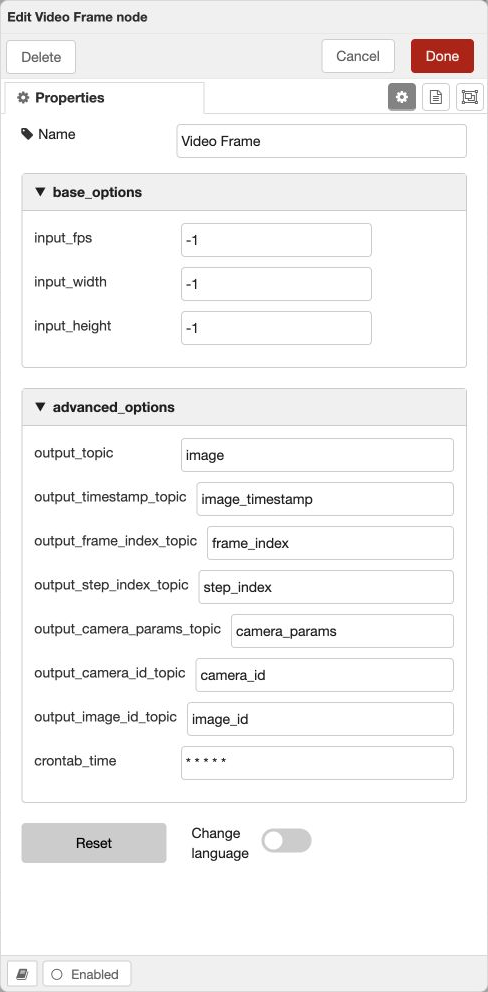
Input blocks acquire frames or events. Preprocessing may resize images, crop regions or prepare data structures. Select blocks from the installed palette and use the documented message contract for each connection.
Inference
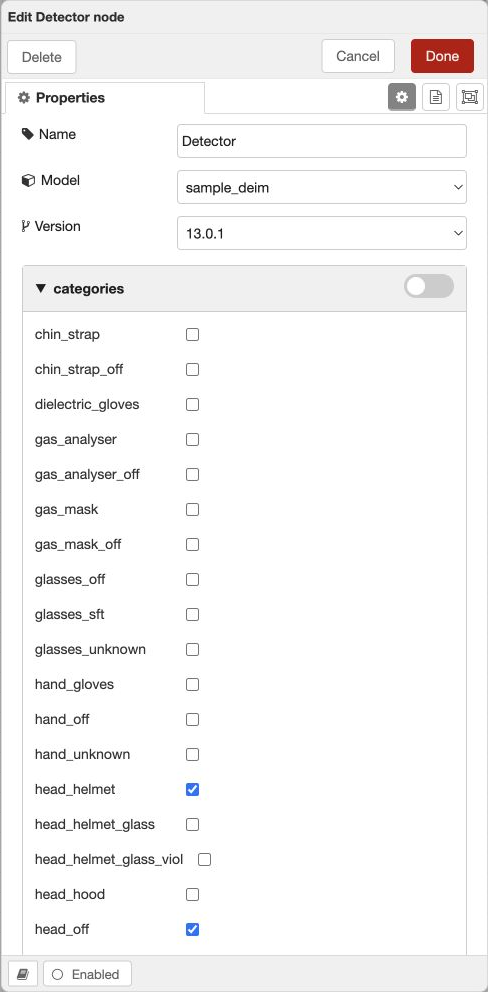
Detector, segmenter, classifier and pose-estimation blocks call compatible model versions. Check the expected input and output structures, task type and runtime profile.
Tracking and relationships
Tracking stabilises objects over time. Relationship blocks can associate a detection with a track or another detection. Verify the identity and lifetime behaviour before using tracks to create events.
Filters, zones and categories
Available logical operations include detection-size filtering, category remapping, detection-in-zone and pose-point-in-zone checks, category/zone attribute filtering, pose-derived zones and NMS. Machine-readable type names depend on the installed palette.
Logic and external conditions
Scenario chains may use discrepancy rules, industrial signals, switches, Python functions, schedules and merges. Validate each input type, branch and temporal condition; a connected graph is not automatically a correct event definition.
Events and observation
Output operations include local visualisation, event creation, dependent events, zone-based events, event sending and image-quality assessment. Test both intermediate data and the final stored or delivered result.
Block parameters and detailed contracts
For each block, inspect its flow_settings entry: id, name, type and parameters. Parameter names, types, current values, editable and options let you verify the selected model, version and category. Logical group names do not define the exact field-level message contract.